Strategic Financial Planning
- Home
- BPO
- Financial Management
- Strategic Financial Planning
Strategic Financial Planning That Builds Stronger, More Profitable Businesses
Turn financial data into strategic business success with expert financial planning, forecasting, capital allocation, risk management, and executive advisory from E-Tech Consultancy & Services.
What Is Strategic Financial Planning?
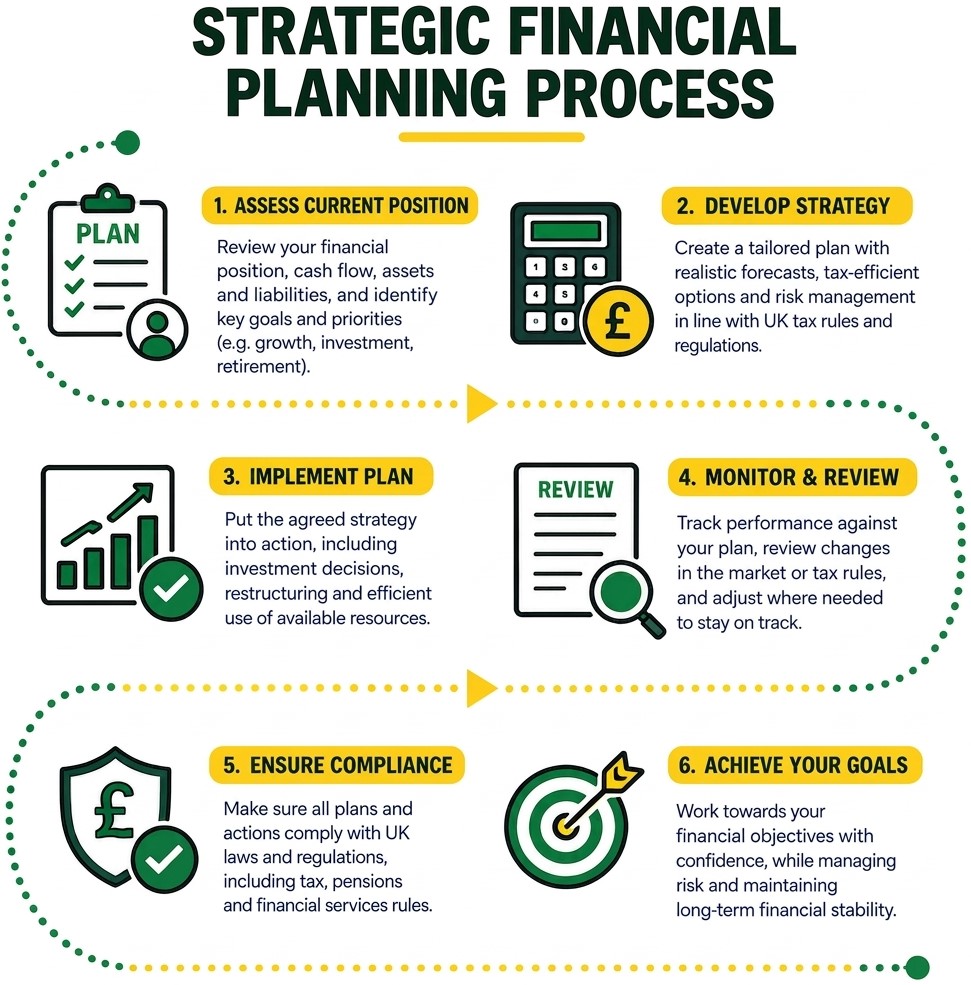
Strategic Financial Planning is the process of aligning financial resources, business objectives, investment decisions, and long-term growth strategies to achieve sustainable profitability and organizational success.
Rather than treating budgets, forecasts, and financial reports as isolated exercises, strategic financial planning connects them into a single, forward-looking framework. It supports budgeting, forecasting, capital allocation, business expansion, risk management, mergers, acquisitions, and investment planning — giving CEOs, CFOs, business owners, and boards a clear, data-driven view of where the business stands today and how financial decisions made now will shape performance three, five, or ten years from now.
why Outsource
Our Strategic Financial Planning Services
Fourteen integrated service lines covering every dimension of financial strategy — from executive roadmaps through M&A financial planning.
Strategic Financial PlanningExperts
Comprehensive financial roadmaps aligned with business objectives.
- Corporate Financial Strategy
- Business Financial Roadmaps
- Strategic Goal Alignment
- Financial Performance Planning
- Long-Term Growth Strategy
- Executive Financial Planning
- Financial Governance
- Board-Level Financial Advisory
Long-Term Financial Planning
Financial strategies engineered for future success.
- 3-Year Financial Planning
- 5-Year Financial Planning
- Growth Forecasting
- Capital Investment Planning
- Cash Flow Planning
- Financial Sustainability
- Financial Scenario Planning
- Business Continuity Planning
Financial Strategy Development
Customized financial strategies built around your business model.
- Financial Transformation
- Revenue Strategy
- Cost Optimization Strategy
- Profitability Strategy
- Business Model Optimization
- Financial KPIs
- Value Creation Planning
- Financial Governance Framework
Business Financial Planning
Financial planning aligned tightly with business goals and operations.
- Strategic Business Budgets
- Revenue Planning
- Cost Planning
- Working Capital Planning
- Operational Financial Planning
- Expansion Planning
- Investment Planning
- Performance Forecasting
Budget Planning & Forecasting
Improved budgeting accuracy across every reporting cycle.
- Annual & Quarterly Budgets
- Rolling Forecasts
- Revenue Forecasting
- Expense Forecasting
- Cash Flow Forecasting
- Budget Variance Analysis
- Department Budget Planning
- Executive Budget Reports
Capital Planning
Optimized investment and financing decisions across the business.
- Capital Allocation
- Capital Budgeting
- Investment Prioritization
- Fixed Asset Planning
- Infrastructure Investment
- Growth Capital Planning
- Financing Strategy
- Return on Investment Analysis
Profit Improvement Strategy
Sustainable profit growth plans built on operational and pricing levers.
- Margin Improvement
- Cost Reduction Strategy
- Revenue Optimization
- Pricing Strategy
- Productivity Improvement
- Operational Efficiency
- Expense Control
- Profitability Enhancement
Financial Risk Assessment
Identification and mitigation of financial risk across the enterprise.
- Liquidity Risk
- Credit Risk
- Market Risk
- Operational Risk
- Foreign Exchange Risk
- Enterprise Risk Management
- Internal Financial Controls
- Risk Monitoring
Scenario & Sensitivity Analysis
Preparing businesses for a full range of financial outcomes.
- Best-Case Scenario Modeling
- Base-Case Scenario Modeling
- Worst-Case Scenario Modeling
- Revenue & Cost Sensitivity
- Cash Flow Scenarios
- Inflation Impact Analysis
- Investment Scenario Modeling
- Strategic Decision Testing
Debt Management Strategy
Sustainable financing structures that protect cash flow.
- Debt Restructuring
- Loan Planning
- Financing Analysis
- Debt Reduction Strategy
- Interest Cost Optimization
- Credit Facility Planning
- Debt Capacity Analysis
- Financial Leverage Analysis
Financial Decision Support
Executive insight delivered for every major business decision.
- Investment Decision Support
- Capital Expenditure Analysis
- Business Expansion Decisions
- Pricing Decisions
- Cost-Benefit Analysis
- Business Intelligence Reporting
- Executive Dashboards
- Financial Recommendations
Business Valuation Planning
Support for strategic investment, growth, and exit decisions.
- Enterprise Valuation
- Shareholder Value Planning
- Business Sale Preparation
- Investment Readiness
- Value Growth Strategies
- Exit Planning
- Financial Positioning
- Valuation Forecasting
Measurable Outcomes
Benefits of Our Strategic Financial Planning Services
Make informed financial decisions, optimize your resources, and build a secure path toward long-term financial growth.
- Better Financial Decisions
- Long-Term Profitability
- Stronger Cash Flow
- Improved Financial Stability
- Smarter Capital Investments
- Increased Operational Efficiency
- Better Business Agility
- Reduced Financial Risks
- Stronger Executive Leadership
- Sustainable Growth
- Better Resource Allocation
- Improved Shareholder Value
- Higher Investor Confidence
- Future-Ready Business Strategy
FAQs
Strategic Financial Planning FAQs
Strategic financial planning is the process of aligning a company's financial resources, budgets, investments, and capital structure with its long-term business objectives, so every financial decision supports sustainable growth, profitability, and shareholder value.
Long-term financial planning gives businesses a multi-year roadmap for growth, capital investment, and cash flow, helping leadership make confident decisions, secure financing, and remain resilient through changing market conditions.
Financial strategy development identifies the revenue, cost, and capital levers with the greatest impact on profitability, translating them into measurable KPIs, budgets, and action plans that improve financial performance over time.
Capital planning determines how a business allocates funds across investments, assets, and growth initiatives to maximize return. It matters because poor capital allocation is one of the most common causes of stalled growth and weak profitability.
Scenario analysis models best-case, base-case, and worst-case financial outcomes, allowing leadership to stress-test decisions and prepare contingency plans before market, cost, or demand shocks occur.
Sensitivity analysis measures how changes in a single variable — such as revenue growth, input costs, or interest rates — affect overall financial outcomes, helping businesses identify which assumptions carry the greatest risk.
We improve profitability through margin analysis, cost optimization, pricing strategy, revenue mix review, and productivity improvement plans, all supported by financial models that quantify the expected impact of each initiative.
Yes. Every financial strategy we develop is tailored to your industry, business model, growth stage, and risk profile — we do not use generic templates for manufacturing, technology, retail, healthcare, construction, or any other sector we serve.
Most businesses benefit from quarterly financial plan reviews with a full strategic refresh annually, though fast-growing companies or those in volatile markets may require monthly or rolling forecast updates.
Business valuation planning proactively builds enterprise value ahead of a future sale, investment round, or ownership transition, using recognized valuation methodologies to identify and close the gaps that most affect business worth.