
What is Making Tax Digital?
Making Tax Digital (MTD) is HMRC’s initiative to modernise the UK tax system by moving record-keeping and submissions to digital platforms. It helps individuals, landlords and businesses keep accurate records and stay compliant.
By connecting compatible software directly to HMRC, MTD reduces manual errors and simplifies tax management. We review your records, help select suitable software, organise digital processes and clarify reporting responsibilities, helping you manage submissions with confidence.
HMRC is going digital-first
Digital record-keeping is being rolled out across the major tax streams.
Fewer errors
Digital recordscan help reduce manual entry errors, a common cause of incorrect returns and enquiries.
A real-time view
Up-to-date records give you a current view of your tax position.
Plan early
Early planning avoids disruption, penalty risk and last-minute software changes.
How we support your transition
Digital record-keeping
We assess your current methods and recommend suitable MTD-compatible software.
Cloud accounting integration
Setup for platforms such as Xero, QuickBooks and Sage.
API and bridging software
Connecting spreadsheets or legacy systems to HMRC digitally.
MTD transition strategy
A phased rollout plan that limits disruption.
Staff training and onboarding
Team training and client communication materials.
Ongoing compliance monitoring
Support after go-live as rules and thresholds evolve.
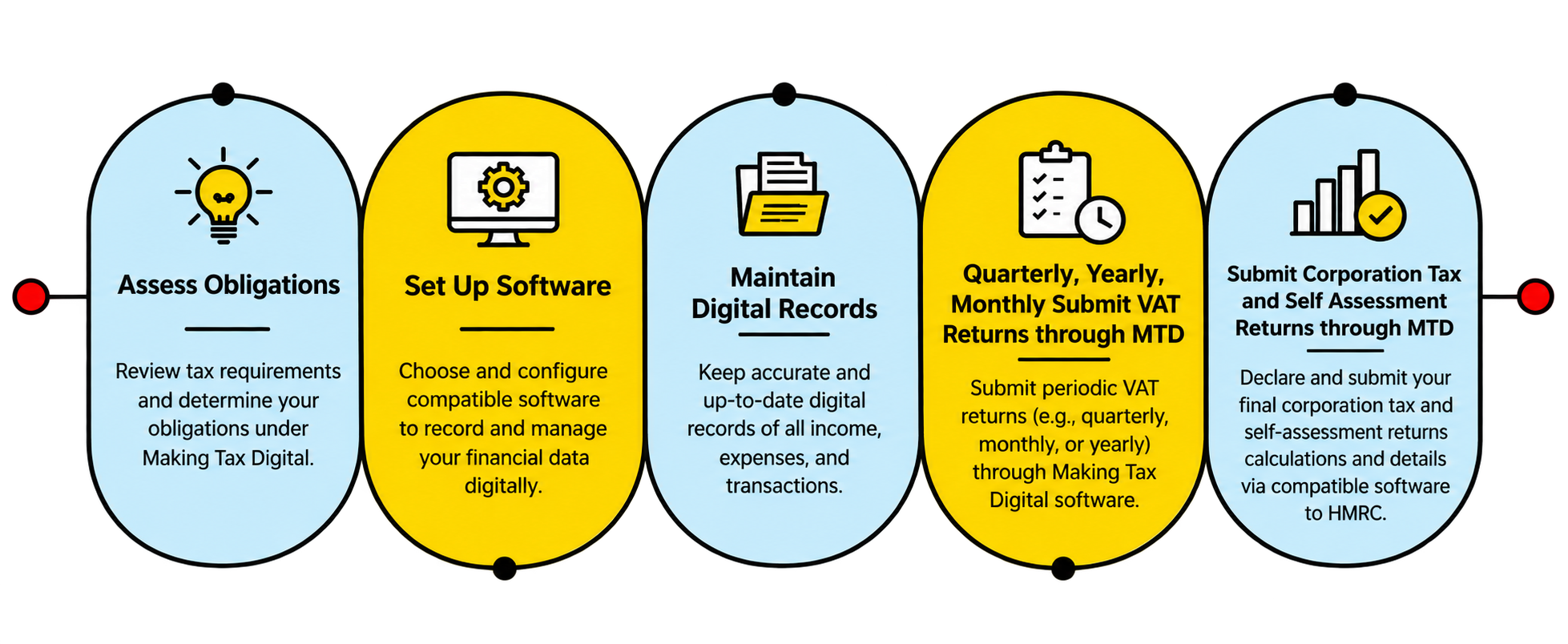
Step-by-step guide to becoming MTD compliant
Assess your records
Review current record-keeping and identify gaps.
Choose compatible software
Full cloud accounting or bridging software.
Migrate and test data
Before relying on it for live filings.
Train your team
Staff, and clients where relevant, learn the new process.
Go live
Submit digitally, with a named contact for troubleshooting.
Monitor and review
Review your setup as your business or the rules change.
MTD readiness checklist
- You know which MTD rules apply to you, and from when
- Records are kept digitally, not on paper or in disconnected spreadsheets
- Your software is HMRC-recognised and MTD-compatible
- You have a plan for migrating historical data accurately
- Staff have received basic training
- You have a process for reviewing submissions
- It’s clear who to contact if a submission fails
HMRC’s MTD regulations
MTD is a legal requirement for those in scope, introduced in phases with separate thresholds and timetables:
- VAT: VAT-registered businesses have been in scope since 2022, regardless of turnover.
- Income Tax Self Assessment: being phased in for sole traders and landlords above set income thresholds, starting April 2026.
Frequently Asked Questions
Let’s Discuss Your Requirements
Have a question about our services? Speak with our team to discuss your engagement, deadlines and the support you need.
What Is Making Tax Digital?
HMRC’s initiative requiring digital record-keeping and submission of tax information using compatible software, rather than manual filing. By connecting compatible software directly to HMRC, it helps reduce manual errors and gives you a clearer, more up-to-date view of your tax position.
Is Making Tax Digital a Legal Requirement?
Yes, for those within its scope. Start dates and requirements vary by tax stream and income, so confirm your position with HMRC or a qualified adviser. We can review your circumstances and explain which rules apply to you and when, so you can plan ahead with confidence.
Who Needs to Comply with MTD for Income Tax?
Sole traders and landlords are being phased in based on qualifying income, with the threshold reducing over time. We can help check your circumstances. If you are likely to come into scope in future, it is worth preparing early, so your records and software are ready before the requirement applies to you.
How do I know If I’m Ready?
Use the readiness checklist above. If anything is missing, we recommend an assessment well before your deadline. We review your current records, software and processes, identify any gaps and agree the steps needed to get you ready.
How Long does a Transition Take?
Straightforward transitions can often be completed within a few weeks. Larger client banks usually take longer with a phased rollout. The timing depends on your current records, the software you choose and how much historical data needs to be migrated and tested.
Which Accounting Software do you Set Up for MTD?
We set up cloud accounting platforms such as Xero, QuickBooks and Sage. If you use spreadsheets or legacy systems, we can connect them to HMRC digitally using API and bridging software. We help you choose the option that suits your business, so you do not have to change more than necessary.
Do you Provide Support After we go Live?
Yes. We provide ongoing compliance monitoring after go-live as rules and thresholds change. You also get a named contact for troubleshooting if a submission fails, along with periodic reviews of your setup as your business grows.
Why Should we Plan for MTD Early?
Early planning avoids disruption, penalty risk and last-minute software changes. We can prepare a phased transition strategy that limits disruption to your business. Starting early also gives you time to train your team, test your data and become comfortable with the process before it becomes mandatory for you.