
What strategic financial planning involves
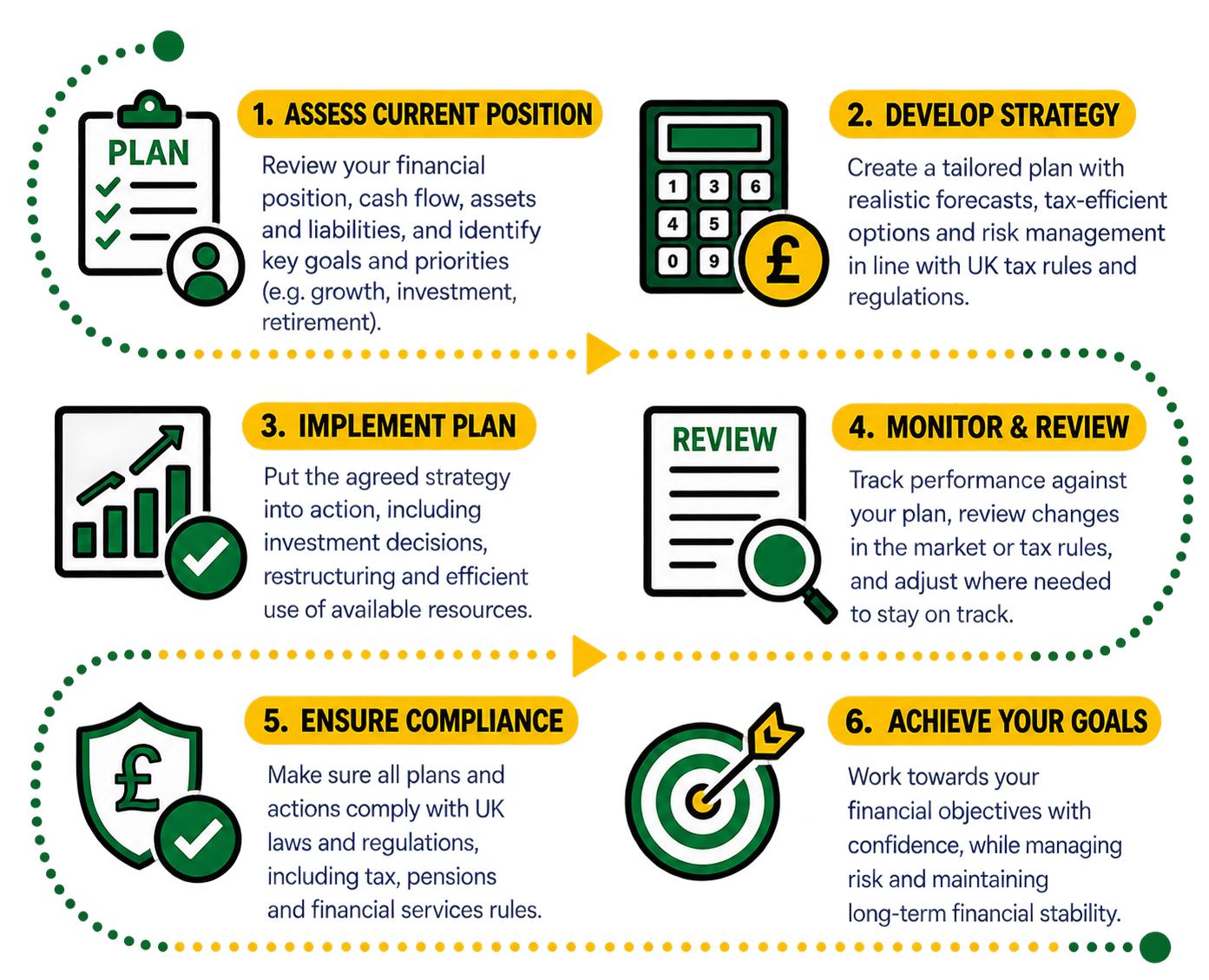
Strategic financial planning brings budgets, forecasts and financial reports together into one forward-looking framework. It covers budgeting, capital allocation, business expansion, risk management, mergers and acquisitions (M&A), and investment planning to support your long-term business goals. Instead of reacting to events as they happen, you have a clear plan that shows where the business is heading and how it will get there. This helps leaders stay focused on priorities and avoid decisions that look sensible in the short term but create pressure later.
By analysing performance, identifying risks and evaluating opportunities, strategic financial planning helps leaders make informed decisions. It provides a clear view of how today’s decisions may impact profitability, cash flow and business growth over the next three, five or ten years. We help review assumptions, assess funding requirements and compare potential scenarios, aligning financial priorities with your wider business strategy. Regular reviews support practical adjustments, clearer resource allocation and better preparation for changing market conditions and future opportunities as your business develops over time. This gives you the confidence to commit to investments, manage borrowing sensibly and keep your goals realistic and achievable.
A strong financial plan also makes it easier to communicate with the people who matter to your business. Directors, boards, lenders and investors want to see that growth is supported by realistic forecasts, sensible use of capital and a clear understanding of risk. By bringing your numbers and your strategy together, we help you explain your plans clearly, track progress against them and make timely adjustments, so your business stays on course as it grows.
Our planning services
| Service Area | What It Covers |
|---|---|
| Strategic planning | Corporate strategy, financial roadmaps, board-level advisory |
| Long-term planning | Three- and five-year plans, growth forecasting, scenario planning |
| Budgeting and forecasting | Annual and quarterly budgets, rolling forecasts, variance analysis |
| Capital planning | Capital budgeting, investment prioritisation, financing and ROI |
| Profit improvement | Margin improvement, pricing strategy, cost reduction |
| Financial risk assessment | Liquidity, credit, market and currency risk, internal controls |
| Scenario and sensitivity analysis | Best, base and worst-case modelling |
| Debt management | Restructuring, facility planning and leverage analysis |
Benefits
- Sounder financial decisions
- Stronger long-term profitability
- Healthier cash flow
- Greater financial stability
- Smarter capital investment
- Better operational efficiency
- Lower financial risk
- Stronger leadership and governance
- Sustainable growth
- Higher shareholder value and investor confidence
Frequently Asked Questions
Let’s Discuss Your Requirements
Have a question about our services? Speak with our team to discuss your engagement, deadlines and the support you need.
What Is Strategic Financial Planning?
Aligning a company’s cash, budgets, investments and capital structure with its long-term goals, so each decision supports growth and profitability.
Why does Long-Term Planning Matter?
A multi-year roadmap helps leaders plan growth, capital spending and cash flow, with easier access to finance and resilience when markets change.
What Is Capital Planning?
Capital planning is deciding which major long-term investments to make, such as equipment or expansion, and how to fund them without putting cash flow at risk.
How does Scenario Analysis Help?
Scenario analysis models best, base and worst-case outcomes, so you can test decisions, understand the risks and prepare contingency plans before you commit.
How Often Should Plans be Reviewed?
Financial and strategic plans should be reviewed regularly, not just when they are first written. As a general rule, a plan should be checked monthly, reassessed quarterly and fully refreshed once a year. The right rhythm depends on the size of your business, how quickly your market changes and how much risk you carry.
What Is a Rolling Forecast?
A rolling forecast is updated regularly, for example monthly or quarterly, so it always looks a set period ahead. It lets you adjust plans as results come in instead of relying on a fixed annual budget.
Can you Help with Long-Term Growth Planning?
Yes. Our long-term planning covers three- and five-year plans, growth forecasting and scenario planning, so you can see how growth could affect profitability, cash flow and funding needs.
What Financial Risks do you Assess?
We review liquidity, credit, market and currency risk, as well as internal controls, so you understand your exposure and can prepare practical responses.